

Tech & Science
Saturn's rings are disappearing, evidenced by an excess of ultraviolet radiation and the erosion of the planet's upper atmosphere.
Hi, what are you looking for?

Saturn's rings are disappearing, evidenced by an excess of ultraviolet radiation and the erosion of the planet's upper atmosphere.

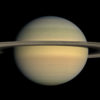
Saturn's present tilt is the result of the resonance with Neptune and the loss of a satellite.


Enceladus, though tiny, also hides a liquid water ocean beneath an icy shell. A sign of life?
Around 7:30 a.m. Friday morning, planet Earth will lose the Cassini spacecraft’s signal just before it takes that final, fiery plunge into Saturn’s atmosphere,...
The new audio files come from data collected from the Cassini spacecraft when it dove in between Saturn and its mysterious rings. Cassini–Huygens is...
An unmanned NASA spacecraft, Cassini, is poised to plunge into the gap between Saturn and its rings, a pioneering journey that could offer an...
An ice-encrusted moon orbiting Saturn appears to have the conditions necessary for life, NASA announced Thursday, unveiling new findings made by its unmanned Cassini...
Titan is the largest moon of Saturn and it is the only solar system moon known to have a dense atmosphere together with stable...
Saturn is the sixth planet from the Sun and the second-largest in the solar system, after Jupiter. Saturn is a gas giant and its...
Dione is a moon of Saturn. It was discovered by Italian astronomer Giovanni Domenico Cassini in 1684. Dione is the fifteenth largest moon in...